
Return on Investment
Maximizing the Return on Your Home Investment
One of the questions we're asked most often is, "Where should I invest my money to get the greatest return?" Whether you're preparing to sell, renovating your forever home, or purchasing an investment property, making strategic design decisions can have a significant impact on both your home's value and your everyday enjoyment of the space.
Return on investment (ROI) measures the gain or loss generated from an investment relative to the amount of money invested. When it comes to your home, ROI is about making thoughtful improvements that not only enhance your daily living experience but also increase your property's long-term value.
While every project is unique, certain renovations consistently provide a stronger return on investment than others. The key is prioritizing updates that improve both functionality and timeless appeal. Below are some of the home improvements we recommend to help maximize the value of your investment.
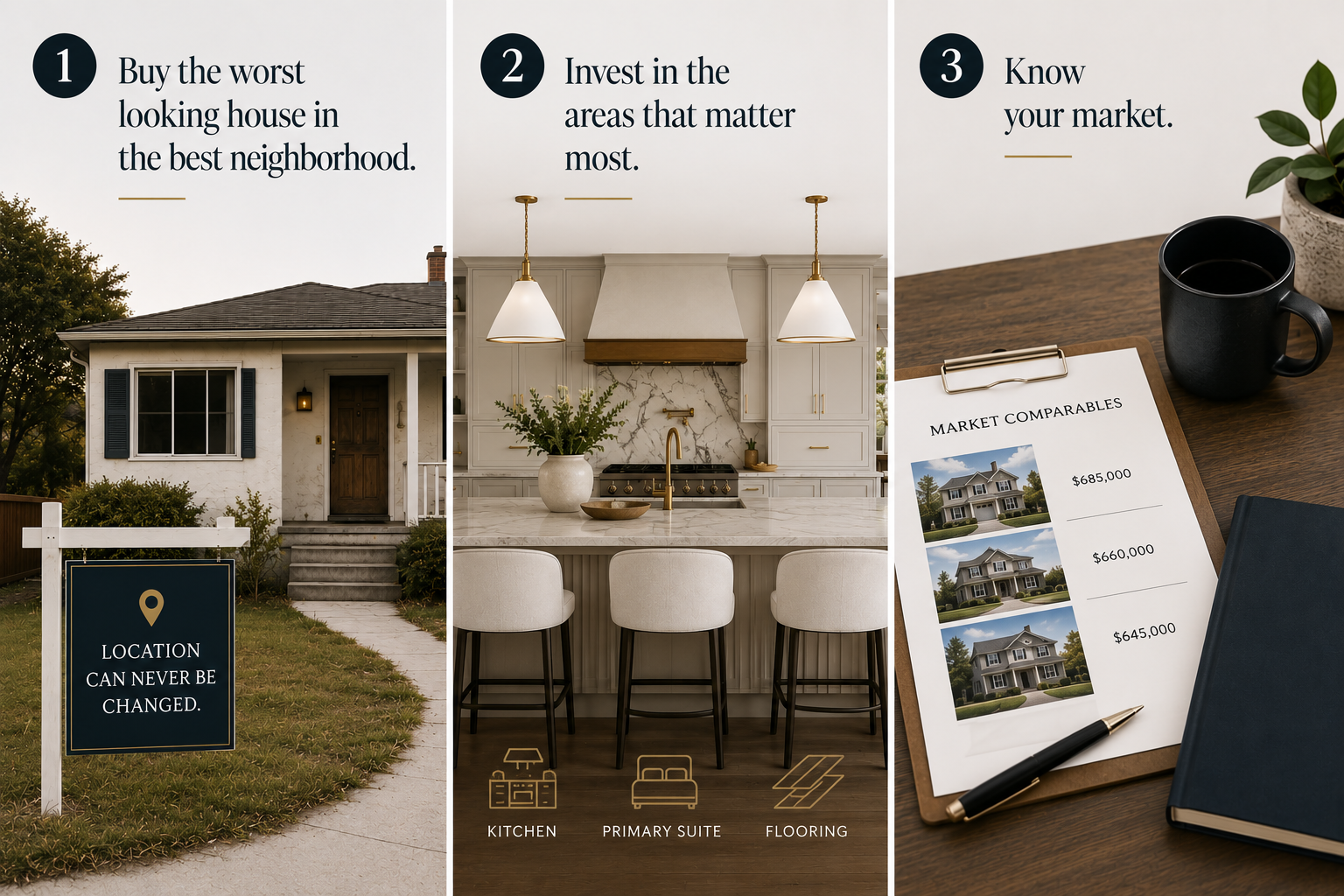
1: Buy the Least Updated Home in the Best Neighborhood
When purchasing a home, one of the best investments you can make is choosing the least updated property in the best neighborhood your budget allows. While finishes, landscaping, and interiors can all be transformed over time, location is the one thing that can never be changed!
It's easy to be drawn to a beautiful, move-in-ready home, especially with the influence of social media and today's design trends. However, those homes often come with a premium price. Purchasing a home with great potential gives you the opportunity to build equity while creating a space that reflects your personal style over time.
The goal is to think beyond today's finishes and focus on the long-term value of the property. A home's appearance can always be improved, but its location is permanent and that 8is extremely important to keep in mind while searching for your next home!
2: Invest in the Areas That Matter Most
Not every renovation provides the same return on investment. If your goal is to maximize your home's value, prioritize the spaces that buyers notice first: the kitchen, the primary suite, and the flooring throughout the home.
These are often the most expensive and disruptive renovations which nobody wants to live through during the time of renovation, which is why buyers place so much value on homes where they've already been completed. While cosmetic updates like paint, lighting, and hardware are relatively simple to change, replacing flooring or remodeling a kitchen requires a much larger investment of both time and money that many buyers don’t want to deal with.
When planning your renovation budget, focusing on these key areas will typically provide the greatest return while making your home more appealing to future buyers.
3: Know Your Market
One of the most common mistakes homeowners make is investing more in a renovation than their neighborhood can support. Before beginning any major project, it's important to research comparable home sales (comps) in your area.
For example, investing $50,000 into a luxury kitchen may not provide the return you're hoping for if nearby homes don't support that level of finish. While high-end appliances, custom cabinetry, and premium materials are beautiful additions, they should be appropriate for the value of the surrounding homes or else you will not get your money back in the long run.
A successful renovation strikes a balance between creating a home you love and making smart financial decisions. Understanding your local market helps ensure your investment adds value rather than pricing your home beyond what buyers are willing to pay.
Final Thoughts
Whether you're purchasing your first investment property or renovating your forever home, keeping these three principles in mind can help you make more confident decisions:
Buy the least updated home in the best neighborhood.
Invest in the spaces that add the most value.
Always understand your local market before renovating.
A thoughtful renovation should do more than improve the look of your home—it should be an investment in its future value. By planning strategically and making informed design decisions, you'll create a home that's both beautiful and financially rewarding.